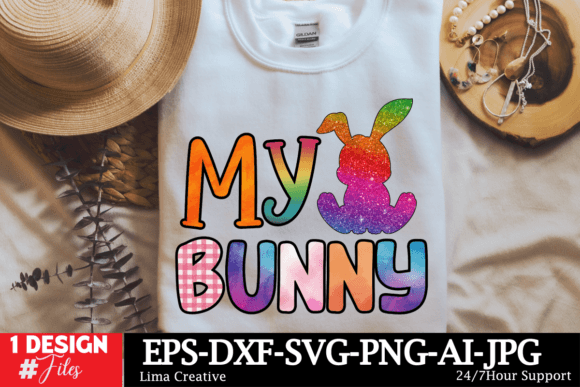
My Bunny Easter Sublimation Designs
A Designer’s First Look: Sweet, Simple, and Ready for Real Stitching
When I opened the My Bunny Easter Sublimation Designs zip file—just one PNG and one JPG, both 300 DPI—I paused. Not because it was complex, but because its quiet charm landed immediately: a soft, rounded bunny face with gentle ears, subtle whiskers, and a tiny bow or egg motif (depending on the version). It’s not fussy. It’s not overly detailed. It’s the kind of graphic that breathes well on fabric—especially when translated into thread. As someone who’s stitched hundreds of holiday designs for boutique clients and Etsy sellers, I knew this wasn’t just “cute.” It was *considered*. The negative space around the bunny is generous, the curves are smooth and stitch-friendly, and the overall footprint feels intentional—not cramped, not sprawling.
Where This Design Truly Shines in Embroidery
I tested My Bunny Easter Sublimation Designs as the focal point on a natural linen tote bag—and it worked beautifully. Why? Because sublimation-ready graphics like this often translate cleanly to embroidery when you treat them as *starting points*, not final stitch files. The clean lines and moderate scale mean you can easily convert it into a machine embroidery design using your digitizing software or a trusted digitizer. It performed especially well on mid-weight cotton sweatshirts and baby onesies: the shape holds up without distortion, the proportions stay friendly and legible even at 3.5" wide, and the lack of fine interior linework means fewer headaches with fill stitch density or thread breaks.
For craft business owners, this is a quiet asset. Imagine it as an embroidered patch on a denim apron for a local bakery’s Easter pop-up—or stitched onto the corner of a kitchen towel alongside hand-embroidered herbs. It reads as handmade, not mass-printed. Customers notice that difference. On personalized gifts—a custom pillow cover for a new parent, a nursery wall hanging, or a small-batch tea towel set—the bunny feels warm and intentional, not generic. And yes, it works on T-shirt designs too—but only if you’re stitching it, not printing it. Remember: this is a *digital download for sublimation*, so if you’re embroidering, you’ll need to digitize first.
Where to Proceed With Care
This isn’t a one-size-fits-all embroidery file—and that’s okay. My Bunny Easter Sublimation Designs doesn’t include built-in stitch data, so don’t assume it’s ready for your hoop out of the gate. I’ve seen makers rush to stitch it directly from the PNG and end up with jagged edges or uneven satin stitch borders. That’s not the design’s fault—it’s a reminder that graphics and embroidery files serve different functions.
Use caution on: stretchy knits (stabilizer choice is non-negotiable), dark fabrics (test thread contrast early—light pastels may vanish), curved surfaces like caps (simplify or resize the bunny to avoid distortion), and textured weaves like burlap or heavy terry cloth (the subtlety of the whiskers or bow detail may get lost). Also, avoid scaling it down below 2.25"—tiny ears and delicate loops become unreliable in fill stitch, and running stitch outlines can pixelate or disappear entirely in conversion.
What This Design Says About Your Brand—and Your Customers’ Trust
When your Etsy shop lists a handmade product featuring My Bunny Easter Sublimation Designs, customers aren’t just buying a bunny. They’re buying *tone*: gentle, seasonal, unhurried. That matters. In a market flooded with loud, cartoonish Easter graphics, this one leans into quiet joy—making it ideal for premium baby embroidery, mindful gift shops, or slow-craft brands. It supports brand consistency without demanding rigid color palettes; stitch it in ecru on oatmeal linen or mint on charcoal cotton, and it still feels cohesive.
But here’s what builds real trust: how you present it. If you’re selling finished products, show it stitched—not just the PNG mockup. Include close-ups of thread sheen, fabric drape, and seam integration. If you’re a digital product seller offering digitized versions, be transparent: “Digitized from My Bunny Easter Sublimation Designs—optimized for 4” hoops, medium-density fill, and cotton blends.” Clarity here prevents returns, negative reviews, and wasted thread.
Practical Notes Every Embroidery Designer Should Run Through
- Always test on scrap fabric first—especially with your exact stabilizer + thread combo. Linen behaves differently than jersey, and that affects how the bunny’s curves land.
- Review stitch density in your digitized version. Too dense = puckering on lightweight baby clothes; too light = gaps on towels.
- Confirm hoop size compatibility. The original graphic fits comfortably within a 4x4 hoop at standard scale—but double-check your digitized version’s bounding box.
- Inspect small details post-digitizing: whiskers, inner ear curves, bow loops. These often need manual cleanup or simplification.
- Test black-and-white mockups to assess contrast before committing to thread colors.
- Compare performance on light vs. dark backgrounds. What reads softly on ivory may feel washed out on navy—adjust underlay or top thread accordingly.
- Verify licensing terms before selling finished items or reselling digitized versions. This download is labeled for printing and T-shirt use—but commercial embroidery rights aren’t stated outright. When in doubt, contact the creator.
Final Thought: A Thoughtful Tool, Not a Magic Button
My Bunny Easter Sublimation Designs won’t automate your workflow—but it will elevate your intentionality. It’s the kind of graphic that rewards thoughtful translation: a starting point for embroidery files that feel personal, seasonally grounded, and commercially sound. Whether you’re prepping for a spring craft fair, building a line of nursery decor, or designing custom sweatshirts for a local preschool, this bunny brings calm clarity—not clutter. Just remember: great embroidery starts with smart choices long before the needle drops. Choose wisely, test thoroughly, and let the simplicity do the work.